Under the Regulatory Reform (Fire Safety) Order 2005 and the Fire Safety (England) Regulations 2022, maintaining an audit-ready fire door inspection checklist is a strict statutory duty for premises managers, landlords, and Designated Responsible Persons. During an audit by local Fire and Rescue Authorities or CQC compliance teams, verbal assurances are not sufficient. Inspectors require an organized, permanent, and chronological audit trail.
Here is the essential inspection schedule every UK commercial facility, HMO, or multi-occupied residential building must maintain to remain compliant.
1. Routine Fire Door Inspection Checklist (Regulations 2022)
Defective fire doors are one of the most cited non-compliance points in UK premises. Your periodic checks must inspect and record:
- Self-Closing Devices: Ensure the door closes fully into the rebate from any angle, overcoming the latch without sticking.
- Gaps & Perimeter Clearances: Verify that the perimeter gap around the door leaf does not exceed 3 mm to 4 mm, and the threshold gap complies with fire stopping standards (typically 8 mm to 10 mm, unless smoke seals require less).
- Intumescent Seals & Cold Smoke Seals: Inspect for physical damage, paint coverage that compromises expansion, or missing sections.
- Hinges & Hardware: Confirm all hinges are CE/UKCA marked, fire-rated, firmly secured, and showing no signs of leaking lubricant or loose screws.
- Glazing & Vision Panels: Check that fire-resisting glass is free of cracks and retains its original fire-rated beading.
2. Weekly Fire Alarm Testing (BS 5839-1)
- Manual Call Point (MCP) Rotation: Test a different call point each week during standard operational hours so that all points are verified systematically over time.
- Audibility & Transmission: Ensure alarm sounders and visual alarm devices (VADs) operate clearly across all zones, and verify signals transmitted to any Alarm Receiving Centre (ARC).
- Log Entry: Record the date, exact time, call point identifier/location, sounder verification, and the name of the testing officer.
3. Monthly Emergency Lighting Checks (BS 5266-1)
- Functional Simulation: Switch on the emergency lighting system (using test keys or central test units) to simulate mains failure.
- Visual Audit: Walk all escape routes to verify that luminaires and illuminated exit signs illuminate cleanly and are unobstructed.
- Annual Discharge Testing: In addition to monthly functional tests, plan and record the mandatory annual full-duration test (typically 3 hours).
4. Fire Extinguishers & Defect Tracking (BS 5306)
- Monthly Visual Checks: Confirm that extinguishers remain in their designated wall brackets or stands, safety pins and tamper indicators are intact, pressure gauges show the correct operating range, and no physical corrosion is present.
- Corrective Action Records: Any defect identified during weekly or monthly checks must have an immediate paper trail detailing the date flagged, contractor called, remedial action taken, and final sign-off.
Why a Dedicated Statutory Register is Essential
Relying on loose paperwork, spreadsheets, or unverified printouts exposes organizations to compliance friction during official visits. A bound, tamper-proof physical register provides inspecting officers with immediate evidence of ongoing due diligence and responsible management.
Ensure Full Legal Compliance for Your Premises
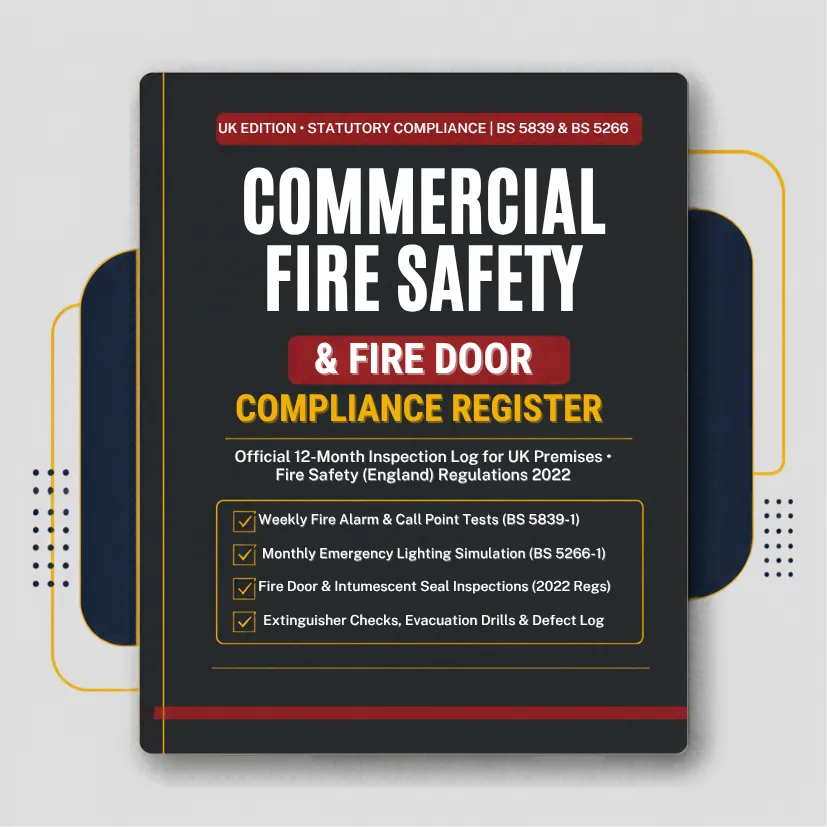
Eliminate loose sheets and compliance friction. The Commercial Fire Safety & Fire Door Inspection Logbook by The IT One UK Compliance Publishing is engineered specifically to satisfy Fire and Rescue Service officers, local councils, and CQC auditors.
- Includes 52-week alarm testing, monthly emergency lighting grids, and dedicated fire door checklists.
- Designed for Responsible Persons, HMO landlords, care homes, and facilities managers.
Order on Amazon.co.uk (Prime Delivery) Learn more about our UK Compliance Catalog →